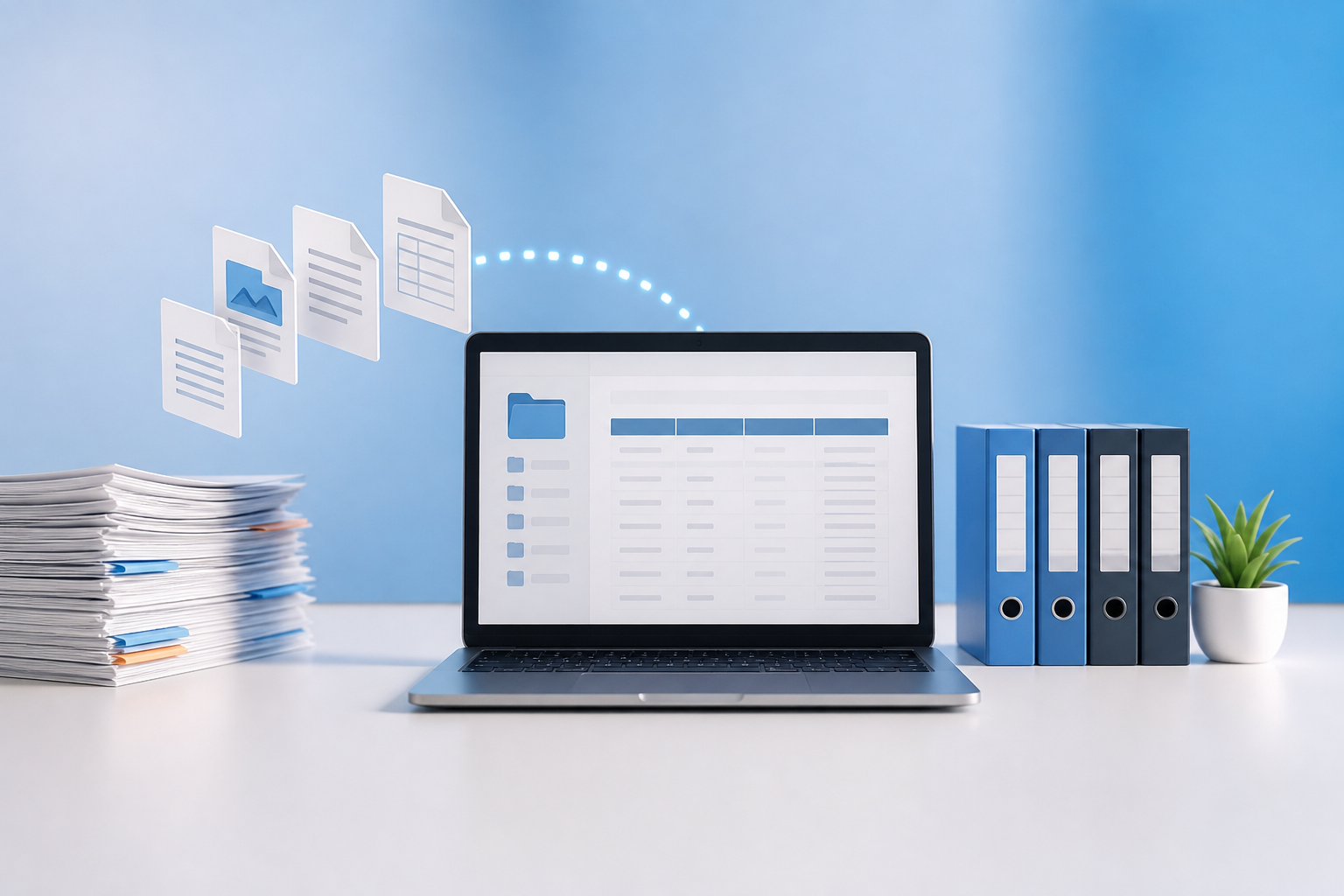
In 2026, businesses are no longer asking whether to outsource data entry—they’re asking how fast they can do it without breaking operations. With the explosion of digital records, AI-assisted workflows, and global talent access, outsourcing data entry services has evolved from a cost-cutting tactic into a strategic growth lever.
Whether you’re running an eCommerce store, a healthcare firm, a logistics company, or a startup drowning in spreadsheets, data entry remains a necessary but non-core function. And that’s exactly why outsourcing it makes sense.
This guide is designed to be your complete, no-fluff roadmap to understanding, evaluating, and successfully implementing data entry outsourcing in 2026.
Data entry outsourcing is the process of hiring a third-party service provider to handle tasks related to data input, processing, management, and maintenance.
Instead of maintaining an in-house team, businesses delegate these repetitive and time-consuming tasks to specialized agencies that are equipped with trained professionals, systems, and quality controls.
Common Data Entry Tasks That Are Outsourced
- Manual data entry from paper or scanned documents
- Data processing and formatting
- CRM data management
- eCommerce product listing uploads
- Invoice and billing data entry
- Data cleansing and validation
- Image-to-text or PDF-to-Excel conversions
- Survey and form data entry
Why It’s More Relevant Than Ever
In 2026, companies generate 10x more data than they did a decade ago, but the value still depends on how clean and structured that data is. Outsourcing ensures that:
- Data is organized and usable
- Internal teams focus on high-value tasks
- Operations scale without hiring bottlenecks
Benefits of Outsourcing Data Entry Services
Let’s move beyond generic claims and break down real, measurable advantages.
A. Cost Efficiency
Hiring, training, and retaining in-house staff is expensive. Add infrastructure, software, compliance, and HR overhead—and costs spiral quickly.
Outsourcing eliminates:
- Recruitment costs
- Salaries and benefits
- Office infrastructure
- Training expenses
Instead, you pay for output—not idle time.
Typical savings: 40%–70% compared to in-house teams.
B. Scalability on Demand
Business isn’t static. You may need:
- 2 people today
- 20 people during peak season
Outsourcing gives you instant elasticity without hiring delays.
This is especially critical for:
- Seasonal businesses
- eCommerce platforms
- Data-heavy campaigns
C. Improved Accuracy & Quality
Professional data entry companies use:
- Double-entry verification
- AI-assisted validation
- Quality assurance layers
This leads to:
- Fewer errors
- Cleaner datasets
- Better decision-making
A good outsourcing partner often delivers 99%+ accuracy rates.
D. Faster Turnaround Time
Outsourcing providers operate with:
- Dedicated teams
- Shift-based workflows
- 24/7 operations
That means your work continues even when your office is closed.
E. Focus on Core Business
Your team should be focusing on:
- Growth
- Strategy
- Sales
- Product development
Not repetitive data entry.
Outsourcing frees up internal bandwidth for what truly matters.
F. Access to Skilled Talent
You get access to:
- Trained operators
- Domain-specific experts
- Process-driven teams
Without the headache of hiring.
Pricing Models for Data Entry Outsourcing in 2026
Understanding pricing is critical before you choose a vendor.
A. Per-Entry Pricing
You pay for each record entered.
Best for:
- Large volume, repetitive tasks
- Simple data formats
Example:
Rs. 0.50 – Rs. 5 per entry depending on complexity
B. Hourly Pricing
You pay for time spent.
Best for:
- Complex or variable tasks
- Unstructured data
Example:
Rs. 300 – Rs. 1000 per hour
C. Project-Based Pricing
Fixed cost for a defined scope.
Best for:
- One-time projects
- Clear deliverables
D. Dedicated Resource Model
You hire a full-time or part-time operator/team.
Best for:
- Ongoing work
- Long-term partnerships
Example:
Rs. 25,000 – Rs. 80,000/month per resource (India-based teams)
E. Hybrid Models
Many companies now offer customized pricing that combines:
- Fixed base cost
- Variable performance-based pricing
Hidden Costs to Watch Out For
Not all outsourcing is cheap—bad outsourcing is expensive.
Watch for:
- Poor quality leading to rework
- Delays impacting operations
- Communication inefficiencies
- Data security risks
Risks of Outsourcing Data Entry (And How to Avoid Them)
Let’s be honest—outsourcing isn’t risk-free.
A. Data Security Concerns
Sensitive data can be exposed if mishandled.
How to avoid:
- Choose vendors with strict NDAs
- Ensure ISO-certified processes
- Use secure file transfer protocols
B. Quality Issues
Low-cost providers often compromise on accuracy.
Solution:
- Ask for sample work
- Check QA processes
- Start with a pilot project
C. Communication Gaps
Time zones, language barriers, and unclear instructions can create friction.
Solution:
- Set clear SOPs
- Use project management tools
- Maintain regular check-ins
D. Lack of Control
You’re relying on an external team.
Solution:
- Use performance KPIs
- Demand regular reporting
- Maintain a single point of contact
E. Hidden Pricing Traps
Some vendors lure clients with low base rates and add hidden charges later.
Solution:
- Get detailed proposals
- Clarify billing structure upfront
How to Choose the Right Data Entry Outsourcing Company
This is where most businesses get it wrong.
A. Evaluate Experience
Look for:
- Industry-specific expertise
- Proven track record
- Case studies
B. Check Accuracy Standards
Ask:
- What’s your accuracy guarantee?
- What QA process do you follow?
C. Assess Technology Stack
Modern providers use:
- OCR tools
- AI-assisted validation
- Workflow automation
D. Data Security Compliance
Ensure:
- NDA agreements
- Secure servers
- Compliance with regulations
E. Scalability Capability
Can they handle:
- 10x workload increase?
- Urgent deadlines?
F. Communication & Support
Look for:
- Dedicated account manager
- Clear reporting structure
- Fast response time
G. Transparent Pricing
Avoid vague pricing models.
Demand:
- Clear breakdown
- No hidden costs
H. Start with a Pilot Project
Never jump into a full contract immediately.
Test:
- Quality
- Speed
- Communication
Industries That Benefit the Most
Outsourcing data entry is not industry-specific—it’s universal.
eCommerce
- Product uploads
- Inventory management
Healthcare
- Patient records
- Billing data
Finance
- Transaction records
- Invoice processing
Logistics
- Shipment tracking data
- Order processing
Real Estate
- Property listings
- CRM updates
Trends in Data Entry Outsourcing (2026 and Beyond)
A. AI + Human Hybrid Models
AI handles:
- Basic extraction
Humans handle: - Validation
- Context-based corrections
B. Real-Time Data Processing
Businesses now expect same-day or real-time updates.
C. Specialized Micro-Services
Instead of general outsourcing, companies now offer:
- Niche-specific data entry services
D. Data Security as a Differentiator
Security is no longer optional—it’s a selling point.
Step-by-Step Process to Start Outsourcing
- Identify your data entry needs
- Define scope and volume
- Shortlist vendors
- Request samples
- Run a pilot project
- Finalize pricing and SLA
- Scale gradually
Outsourcing data entry services in 2026 is not just about saving money—it’s about building operational efficiency, improving accuracy, and scaling without friction.
But here’s the uncomfortable truth:
The success of outsourcing doesn’t depend on the vendor—it depends on how well you choose, onboard, and manage them.
If done right, it becomes one of the highest ROI decisions your business will ever make.
If done wrong, it becomes a silent operational disaster.
To summarize:
- Data entry outsourcing is a strategic necessity in 2026
- It offers cost savings, scalability, and efficiency
- Choosing the right partner is the most critical step
- Risks exist—but they are manageable with the right approach
Next Steps
If you're serious about outsourcing:
- Start small
- Test thoroughly
- Scale intelligently
And most importantly—treat your outsourcing partner as an extension of your business, not just a vendor.